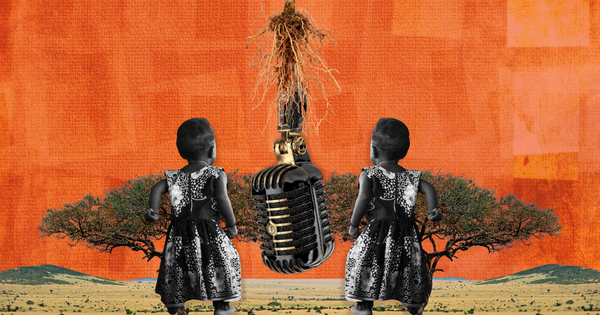
For generations, Black music has operated as more than the soundtrack for celebration or a vessel for grief; it has functioned as an active, living archive of African American history. Spirituals coded with messages between enslaved Africans mapped literal escape routes out of plantation bondage to the intricate sonic tapestries of modern hip-hop and neo-soul, the music has carried an encrypted language.
It is a brilliant strategy of survival and self-sovereignty—a way to speak freely right in front of a world that refused to listen, or worse, sought to suppress.
Today, however, we face a quiet crisis: Algorithms flatten culture and global consumption strips music of its original context. We run the risk of raising a generation of children who hear the rhythm but miss the message entirely.
For Binamu, preserving this lineage keeps our youth culturally literate, ensuring they know how to step into the cipher and claim their full intellectual inheritance. When we let our children consume this music purely as passive entertainment, they miss the deep layer of subtext that gives it its power. Black music is constantly in conversation with its own past. If a child listens to a track today without understanding its foundational references, they are potentially being locked out of their own historical library.
To close this gap, we must actively teach them how to decode the layers of history, literary mastery, and spiritual philosophy that have always given Black artistry its revolutionary edge.
Allusions and Literary Devices

Our children must first learn to recognize literary architecture of popular and historical music.
Our music relies heavily on literary devices—metaphor, double entendre, and signifyin’ (the practice of intentional, collaborative wordplay and critique rooted in African American vernacular). Consider how contemporary artists constantly use callbacks and allusions to pay homage to Black media of the past. When Kendrick Lamar or Beyoncé sample a 1980s gospel track or a speech by Malcolm X, it is a bridge across time. If our children do not understand the allusion, these bridges collapse. They might sing along to a hook without realizing it is a direct echo of a line uttered during the Civil Rights Movement, or a nod to a classic piece of Black cinema like The Spook Who Sat by the Door.
When we teach our children to treat song lyrics with the same academic rigor they would apply to a canonical poem, we train them to look for the hidden genius. We must teach them that a single line in a song can double as a historical citation, demanding that they look up the origin story to truly comprehend the art.
The Anchor of History and Context
Without a grounding in historical context, the sonic brilliance of Black music loses its anchor.
Every major shift in the Black musical landscape was born out of a specific socio-political climate. The blues emerged from the devastating isolation and economic terror of Jim Crow sharecropping; jazz was the soundtrack of urban migration and complex modernism; hip-hop was built from the rubble of a neglected 1970s South Bronx. When children listen to these genres devoid of their origins, the music becomes commodified, stripped of the pain, resistance, and triumph that forged it.
To prevent this, parents and educators must contextualize what is coming through the headphones. If a child is listening to 1990s West Coast rap, understanding the structural abandonment and racial tension that led to the 1992 Los Angeles Uprising will paint the picture of pain and political turmoil that colored the lyrics they’re repeating. If they are streaming a classic Motown track, they should know how those clean harmonies soundtracked a fierce, dangerous fight for basic human rights. Understanding the history transforms the listener from a casual consumer into a witness to a legacy, turning every playlist into an entry point for historical discovery.
The Sacred in the Secular: Spiritual and Religious Cryptography
Perhaps the most complex element of the Black musical code lies in its spiritual and religious dimensions, where the sacred and the secular frequently blur. Black musicians have long pulled from deep wells of traditional African spiritual systems, the Black Christian church, Islam, and esoteric movements to construct their worldviews.
A flawless example of this is Erykah Badu’s seminal 1997 anthem, "On & On." To the uninitiated ear, it is a smooth, laid-back neo-soul track. But to anyone who knows the code, the song is a masterclass in the teachings of the Nation of Gods and Earths (also known as the Five-Percent Nation).
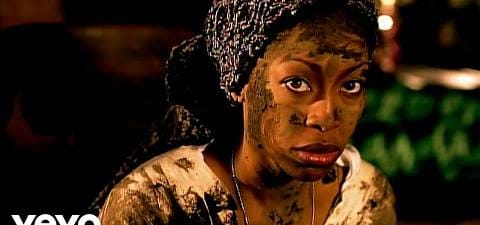
"I was born underwater with three dollars and six dimes / Yeah, you may laugh 'cause you did not do your math"— Erykah Badu, "On & On"
When Badu sings about "doing your math" and references "three dollars and six dimes," she isn't talking about loose change. She is deploying Supreme Mathematics, a conceptual system where numbers correspond to profound cosmic principles (where 3 represents Understanding, 6 represents Equality, and together they form 360 degrees of a complete circle, or cipher). When she notes that "most intellects do not believe in God, but they fear us just the same," she is directly referencing the Five-Percenter philosophy regarding the divine nature of the self. If our children aren’t familiar with these diverse religious and philosophical movements, Badu's metaphysics are reduced to mere catchphrases.
Reclaiming the Masterclass: A Call to Action
Ensuring our children do not miss the code requires a deliberate, active shift in how we share and discuss music in our homes and communities. We cannot leave their cultural education to streaming services that prioritize passive, repetitive listening (of increasingly AI-created music). We have to treat our living rooms, car rides, and dinner tables as cultural classrooms where the music is paused, discussed, and interrogated.
● Practice Active Listening: Turn listening into an interactive game that both parent and child engage in. Challenge your children to identify the samples, ask them what they think a complex metaphor means, and look up the lyric sheets together to investigate unusual phrases.
● Trace the Lineage: When a child falls in love with a current artist, trace the creative family tree backward. Show them how their favorite rapper’s flow was inherited from a 1980s pioneer, who inherited their rhythm from a jazz poet, who inherited their cadence from a southern preacher and so on.
● Build a Cultural Library: Pair the music with books, documentaries, and art. If they are listening to neo-soul or conscious hip-hop, introduce them to the poetry of the Black Arts Movement or the essays of James Baldwin so they can see the same codes operating across different mediums.
When we teach our kids to decode the music, we give them far more than a deeper appreciation for art. We give them a mirror that reflects their own brilliance, resilience, and intellectual inheritance.