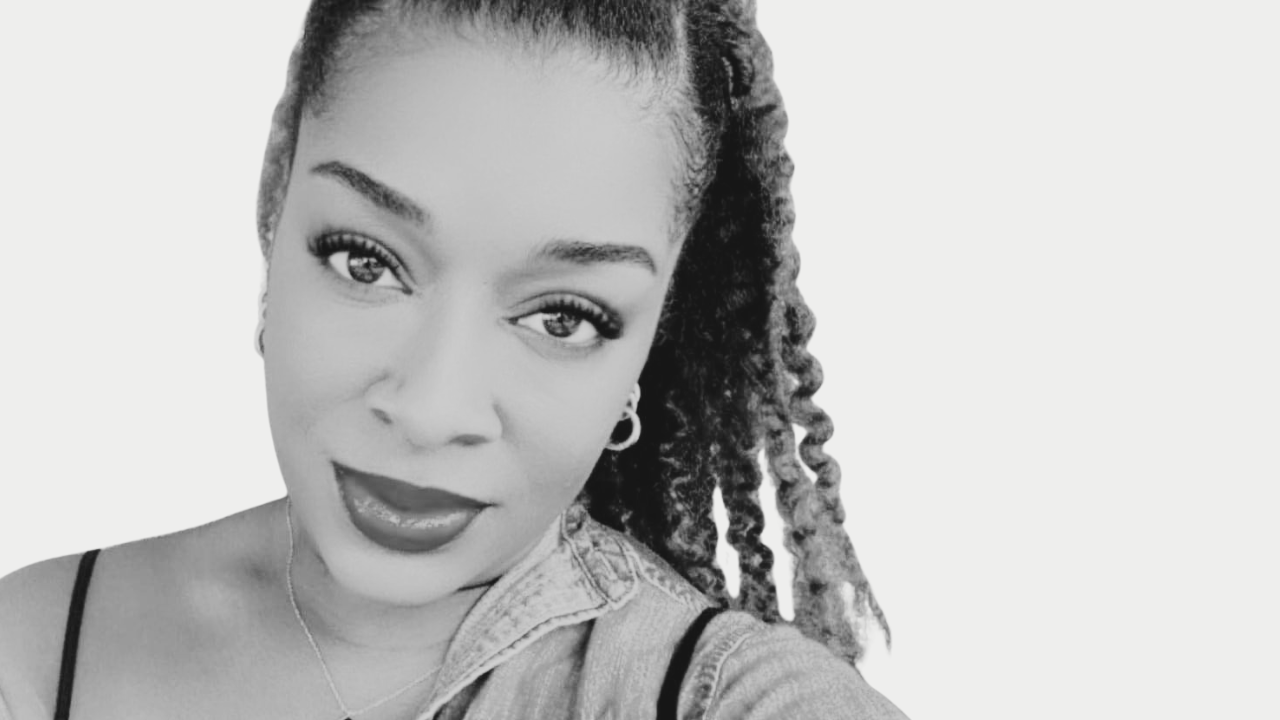
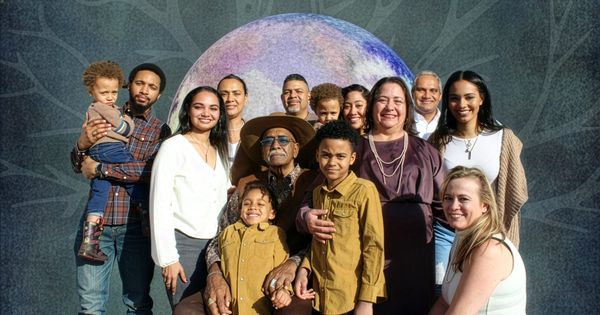
In 2018, my nana and I decided we were finally going to sit down and figure out who our people were. What started as a simple family tree quickly turned into census records, old photographs, phone calls to elders, and the kind of discoveries that can change how you see yourself. Genealogy is beautiful work, but it can also feel deeply overwhelming at first. Someone dies and suddenly nobody remembers Big Mama’s maiden name. An elder mentions “the cousins in South Carolina” nobody talks to anymore. A family reunion T-shirt lists names you’ve never heard before. Then one day you realize your family story only stretches back so far before it disappears into the fog of enslavement.
That wall has a name in genealogy circles: the “1870 Wall.” The phrase refers to the first U.S. Census taken after slavery ended in which formerly enslaved Black people were listed by name. Before 1870, enslaved people were usually reduced to tally marks in records, age, sex, and monetary value. For many entries, there are no surnames, birthdays, or humanity.
For beginners, hitting that wall can feel discouraging. Still, the wall is not always the dead end people think it is. Records and stories both exist. Sometimes the path forward simply requires learning how to look sideways instead of backward.
Here is our beginner-friendly roadmap to start tracing your bloodline and reconnecting with the branches of your family tree that history tried to erase.
Start With the Living Before You Chase the Dead
Many people begin genealogy research by searching databases immediately, but the best archive in many Black families is still the elders.
Start with conversations. Ask older relatives for names, nicknames, birthplaces, church affiliations, schools attended, military service history, old addresses, and funeral home names. Ask who used to host family reunions. Ask which cousin “everybody knew.” Ask who migrated North during the Great Migration and who stayed behind.
Family history often lives inside ordinary details. One relative remembering that your great-grandmother “worked for the Johnsons near the railroad tracks” can eventually help identify the enslaver family connected to your bloodline. A church name scribbled in the back of a Bible can lead to baptism records. A funeral program can reveal maiden names, siblings, and migration paths across multiple states.
Do not worry if the information sounds inconsistent at first. Black genealogy research often requires assembling a puzzle from fragments. Spellings changed, birthdays shifted, and some ancestors intentionally obscured details to survive. The goal in the beginning is not perfection. The goal is collecting clues.
Understand the “1870 Wall”
The phrase “1870 Wall” refers to the difficulty many Black Americans encounter when tracing ancestors before emancipation. Prior to 1870, enslaved people were generally not listed by name in federal census records. Researchers often discover an ancestor in 1870 and then suddenly lose the trail entirely in earlier decades.
That gap can feel devastating the first time you encounter it. One minute, your third-great-grandfather is standing there clearly on the census with a wife, children, occupation, and county listed. The next minute, he disappears into a system that treated Black people as property instead of people.
Moving past the 1870 Wall often requires identifying the enslaver family connected to your ancestors, since enslaved people were usually documented within enslavers’ records. Researchers frequently have to trace white families alongside Black ones through wills, estate inventories, probate records, plantation ledgers, and bills of sale.

This part of the work can carry an emotional weight that many beginners are not prepared for. Genealogy research does not only uncover names and dates. It can also expose painful truths, long-buried family secrets, and generational trauma that still echoes in the present. Some researchers discover NPEs, or “non-paternity events,” where biological parentage differs from what the family believed. Others uncover secret adoptions, children born outside of marriages, hidden siblings, assault histories, or evidence that relatives intentionally concealed parts of their identities for survival.
Even outside of family drama, there can be profound grief attached to learning the names of enslavers or seeing the plantation where your ancestors were held captive. Reading documents where relatives are listed alongside livestock, furniture, or land parcels can trigger anger, sadness, numbness, or confusion. Those reactions are normal. Black genealogy research is rarely just academic. It is historical recovery work tied directly to identity, belonging, and memory.
Freedmen’s Bureau Records Are a Gold Mine
One of the most powerful tools for Black genealogy research is the records of the Freedmen's Bureau. Created in 1865 after the Civil War, the Bureau assisted formerly enslaved people with housing, labor contracts, education, medical care, marriage records, and legal disputes during Reconstruction.
In practical terms, this means the Bureau documented Black lives in ways previous government systems often did not. Freedmen’s Bureau records may include marriage records, labor contracts, school rosters, military service records, court disputes, ration records, and letters from people searching for missing relatives after emancipation.

Those family reunification records can be especially emotional to read. After slavery ended, countless formerly enslaved people searched desperately for parents, spouses, children, and siblings who had been sold away. Newspaper ads and Bureau documents contain heartbreaking notices from people trying to reconnect with family members after decades of separation. Some researchers discover cousins through those reunification efforts alone.
The records are available through multiple archives and genealogy platforms, including the National Archives and Records Administration and major genealogy websites. Patience matters here. Records were handwritten, indexed inconsistently, and often misspelled. Searching variations of names is essential. “McDaniel” may appear as “Mac Daniel.” “Catherine” may appear as “Katie.” An ancestor may also appear under an enslaver’s surname before adopting another name after emancipation.
Learn Migration Patterns Like Family Lore
One reason people lose track of cousins is migration. Black families moved constantly in response to survival, opportunity, violence, labor demands, and housing discrimination. Understanding those patterns can help reconnect branches of your family tree that seem disconnected geographically.
A family line may move from South Carolina to Harlem (as mine did), Mississippi to Chicago, Louisiana to California, or Virginia to Baltimore. Those movements often followed railroad lines, industrial jobs, military service routes, church communities, or extended family networks.

The Great Migration reshaped Black America between roughly 1910 and 1970, but smaller migrations happened continuously before and after. Researching those routes can help explain why DNA cousins appear in unexpected places. A cousin in Nova Scotia may connect to the Black Loyalists. A cousin in Sierra Leone could connect to the Transatlantic Slave Trade and post-emancipation return migrations. A Louisiana branch may reveal Creole ancestry, while Caribbean DNA matches may point toward inter-island movement throughout the African diaspora. Black genealogy rarely stays inside one county for long.
DNA Tests Are Tools, Not Magic
DNA testing can absolutely help find cousins, but many beginners misunderstand what the results actually mean. A DNA test does not hand you a completed family tree. It gives you leads. After all, DNA can only tell you who is related by blood. It doesn't account for all of the ways we bring surrogate family members into our lives.
Think of DNA like a map filled with possible doors. Every match represents a potential connection point somewhere along your family line, although not every door leads to immediate answers. One of the first things beginners should learn is how DNA relationships are measured. Most testing platforms use something called centimorgans, often shortened to cM, to estimate how closely you are related to another person. The higher the number of shared centimorgans, the closer the biological relationship is likely to be.

For context, parents and children usually share around 3,400 cM, while first cousins often share somewhere between 575 and 1,300 cM. Second cousins generally fall in the 200 to 400 cM range, and third cousins may share less than 100 cM. Once you get into distant cousin territory, the numbers become much smaller and sometimes less reliable on their own. That is why close matches are usually the most helpful when you are trying to solve a mystery or identify a branch of the family tree.
Many beginners make the mistake of focusing on one surprising DNA result instead of looking at patterns across multiple matches. Shared match clusters are often where the real breakthroughs happen. If several people all match each other and also connect to the same surnames, locations, or ancestral lines, there is a good chance they are tied to the same branch of your family. Sometimes the answer is not sitting in one giant revelation. Sometimes it is hidden inside smaller overlapping clues.
One free tool that helped my family tremendously was GEDmatch. The platform allows users to upload raw DNA data from testing companies like AncestryDNA, 23andMe, and MyHeritage to compare matches across databases without paying for another DNA test. GEDmatch can feel a little intimidating visually at first, especially compared to more polished commercial platforms, but it offers powerful tools for identifying shared matches, triangulating relationships, and understanding how different family groups connect to one another. For many Black researchers working through brick walls created by slavery, migration, or incomplete records, having access to a free cross-platform genealogy tool can make a major difference.Take screenshots. Build charts. Pay attention to recurring surnames and locations. Older relatives can be especially helpful to test since elder generations often hold stronger DNA connections that are easier to trace.
DNA testing can also reopen some of the emotional territory mentioned earlier. Unexpected matches may reveal hidden siblings, donor conception, adoptions, or relatives who were never acknowledged publicly within the family. Some people discover entire branches of relatives they never knew existed. Others learn that long-held family stories were inaccurate or intentionally concealed.
Approach those discoveries with care and humanity. The truth matters, but living people do too.
Churches, Cemeteries, and Funeral Programs Matter More Than You Think
Black genealogy research often requires looking beyond traditional government archives. Church records can be invaluable. Black churches historically functioned as spiritual centers, schools, political organizing spaces, and community record keepers. Baptism records, marriage announcements, anniversary programs, and church directories may reveal entire branches of family connections.

Cemeteries can also unlock generations. Pay attention to burial proximity, since Black families were often buried in clusters. A nearby grave with an unfamiliar surname may actually belong to cousins through marriage or maternal lines.
Funeral programs are another overlooked resource in Black communities. One obituary can reveal maiden names, migration history, church affiliations, military service, and surviving relatives spread across multiple states. Black families have been archiving ourselves for generations, even when official systems failed to do so. Sometimes the archive is sitting in somebody’s hall closet inside a wrinkled program from 1998. With this, we should take care in preserving and writing obituaries well.
Social Media Has Become a Modern Reunion Space
One of the most fascinating shifts in modern genealogy is how social media has transformed family research.
Facebook groups dedicated to specific counties, surnames, plantations, migration routes, and Black genealogy research have helped reconnect relatives across the diaspora. TikTok creators now walk viewers through census records in real time. Threads and Reddit communities regularly help researchers decipher difficult handwriting or identify historical documents.
@radianceinexile 🤯 GENEALOGY HACK ALERT! If your roots are in the American South, this simple Google search can cut your research time in half. 🔑 Search this: [Your Last Name] Plantation [State] It instantly reveals the powerful clues you need to bridge that 1870 gap. Try it out and tell me what historic names pop up for you! 👇 #GenealogyTok #FamilyHistory #GenealogyHack #BlackGenealogy #Ancestry
♬ hip hop beat with bass(1325081) - Beats by METCH
The internet has effectively become a digital front porch for descendants trying to find one another. Some people discover cousins through DNA platforms and then build relationships through Instagram DMs and family group chats. Others reconnect after seeing familiar family photographs posted online. Technology cannot replace archival research, but it can accelerate community building in ways previous generations never imagined.
The Real Goal Is Bigger Than a Family Tree
Finding cousins is rarely just about names on paper. For many Black Americans, genealogy research becomes a way of restoring continuity after centuries of disruption. Every recovered name pushes back against historical erasure and gives someone back their face. Every cousin found expands the story of who we are.
Our ancestors survived systems specifically designed to scatter them. The fact that descendants are still tracing one another across states, islands, and continents is remarkable in itself. Somewhere, another cousin is probably looking for you too.